
Mention blockchain in a room full of textile suppliers and see what happens. Eyes glaze over, people nod politely, and somewhere in the room someone has already filed it under "crypto" or "overhyped tech thing".
Yet the word 'blockchain' is showing up more and more in conversation about supply chain compliance, traceability, and Digital Product Passports. And most people in the industry don't really know what it means.
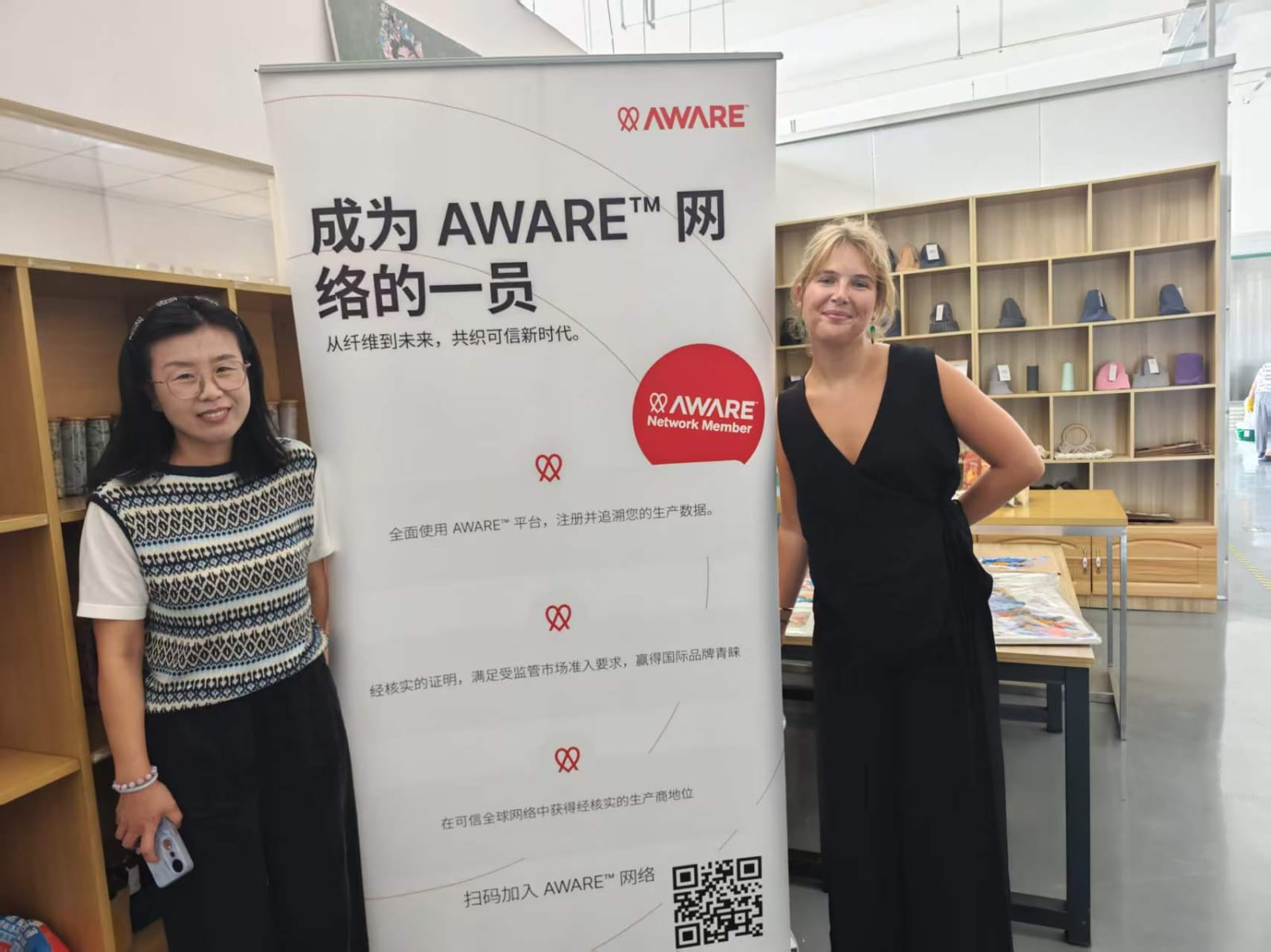
Last month I sat down with a brand customer in the UK to walk them through how AWARE™ works. At some point blockchain came up. So I paused, and explained it. By the end of the conversation, the reaction was simple: "Oh. That's actually not complicated at all." They are now in the process of connecting their suppliers to the platform.
The problem with proof in supply chains today
The textile industry runs on documents. Certificates, declarations, and transaction records passed from supplier to supplier. When a brand or a regulator asks for proof, someone assembles the documentation and sends it over.
The assumption is that the documents are accurate.
But that assumption is broken. Regulations like UFLPA, CSRD, and the EU Digital Product Passport are not just asking for more documents. They are asking for data that can be independently verified, traced, and proven not to have been altered after the fact.
A certificate issued once and applied to every shipment does not meet that bar. Neither does a spreadsheet assembled the week before an audit.
The industry needs a different kind of record. One that cannot be changed after the fact.

What blockchain actually is
A blockchain is a shared record book. Except instead of sitting on one company's server, it exists across thousands of independent computers.
When something gets written into that record book, every one of those computers confirms it. And once confirmed, it cannot be changed. Not edited. Not deleted. Not backdated. By anyone.
That's it.
Public versus private - and why tokenization is important
Not all blockchains are equal. A private blockchain is still controlled by one company. That company sets the rules, controls access, and ultimately you still have to trust them.
Many traceability platforms in the textile industry use exactly this model: a private chain they control, used essentially as tamper-resistant storage. The data is locked, but locked inside their system. You are still dependent on them to access it, interpret it, and vouch for it.
AWARE™ is different in two ways.
First, we use a public blockchain. The record is open and independent. When a producer shares a data token (the unique digital record created at the moment of registration in AWARE™) the recipient can verify it themselves, instantly, against the public chain.
The token carries the reference, the blockchain holds the proof. Anyone can check one against the other.
Second, we do not just store data. We tokenize it. Every kilogram of material gets its own unique digital token at the moment it is registered. That token is the material, digitally. It cannot be duplicated, backdated, or detached from the production record it was created with.
The data does not describe the supply chain after the fact, it travels through it in real time.
No other platform in textile traceability does both. Private storage can secure a record. Public blockchain makes that record independently verifiable and tokenization makes that data physically traceable.
What AWARE™ does with data
As material moves through the supply chain, the token travels with it. Every step adds to the same record. Spinning, weaving, finishing, manufacturing. Each addition is locked in and permanently linked to the physical material it describes.
Because the tokens represent real material, and you can only transact what actually exists, mass balance is not something AWARE™ monitors or audits. It is enforced automatically. It is mathematically impossible to certify more output than verified input allows. The tokens do not exist to do it.
By the time a finished product reaches a brand or a regulator, the full chain of custody was built in real time, at every step, from the source.
What makes this different from other platforms is who owns that data. In AWARE™, the data belongs to the producers who created it. The compliance record a mill builds over time is their asset. It travels with their material, not with their customer relationships.

Conclusion
Once you see it that way, blockchain is not complicated. It is just a record that cannot be rewritten. And in an industry that is being asked to prove more than ever before, that matters.
Most suppliers who have never engaged with blockchain assume it will be complex, or disruptive to how they already work. In practice, the technology runs in the background.
What producers interact with is a platform that captures production data at the source and builds a verified compliance record they own, and carry with them, regardless of who their next customer is.
If you want to see what that looks like in practice, we are happy to walk you through it.
.png)


.jpeg)
.avif)